
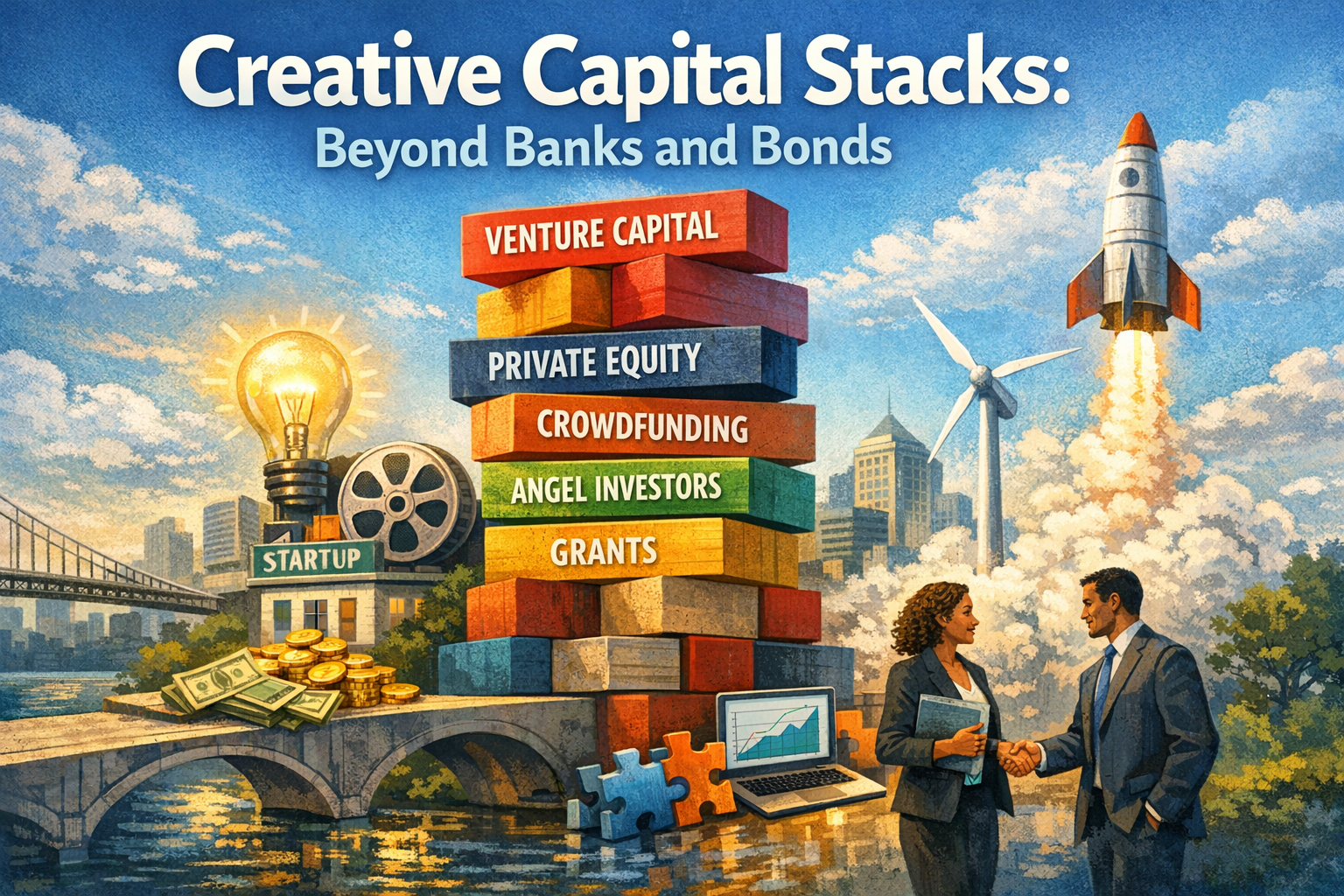
Creative Capital Stacks: Beyond Banks and Bonds
By Nidhi Thakkar, Audit Manager, Sherbert CPA, PC; nthakkar@sherbertcpa.com
In real estate financing and community development landscape, traditional financing models like bank loans, municipal bonds, and equity syndication are no longer enough. Rising interest rates, tighter underwriting, and growing demand for impact-driven projects are pushing developers to think beyond conventional approaches.
At The Sherbert Group, we specialize in structuring creative capital stacks that blend public, private, philanthropic, and mission-aligned funding. These innovative financing strategies unlock new possibilities for sustainable real estate development and community revitalization projects.
What is a capital stack?
A capital stack is the layered structure of funding sources used to finance a project. Traditionally, it includes:
- Senior debt (bank loans)
- Equity (from investors or sponsors)
- Subsidies or grants (government or nonprofit)
Modern projects often require non-traditional layers that reduce risk, increase flexibility, and align with social, environmental, and ESG financing goals.
What makes a capital stack "creative"?
- Goes beyond traditional methods: Uses private credit or structured equity.
- Fills financing gaps: Designed to fill gaps left by conventional lenders, particularly in challenging markets with high interest rates.
- Increases flexibility: Enables developers to secure funding for a wider range of projects.
- Supports ESG and impact investing: Aligns financing with sustainability and community outcomes.
Why creative capital stacks matter
Creative capital stacks aren’t just clever, they’re essential in today’s market. They can:
- Reduce exposure to interest rate volatility
- Attract mission-aligned partners
- Unlock funding for projects that wouldn’t pencil out otherwise
- Strengthen public-private partnerships (PPP) for long-term community impact
Here are some innovative capital sources:
- CDFI Loans: Community Development Financial Institutions (CDFIs): Certified by the U.S. Treasury’s CDFI Fund, these mission-driven lenders like community banks, credit unions, loan funds, and venture capital funds provide flexible financing for underserved markets making projects like affordable housing or small businesses possible where traditional banks would not.
- Philanthropic Capital: Foundations and donor advised funds increasingly invest in housing, preservation, and community assets. Structured as grants or low-interest loans, this capital fills gaps left by conventional financing, reduces reliance on debt, and ensures projects with strong social value can move forward.
- Affordable Housing Financing: Specialized programs and funds designed to support affordable housing developments often combine federal, state, and local resources. These reduce financing costs, preserve affordability, and ensure long-term community impact.
- State Housing Resources: Many states offer housing trust funds, gap financing, and targeted programs to support affordable housing and community development. These resources complement federal programs and private investment, strengthening community revitalization projects.
- Opportunity Zone Capital: Opportunity Zones incentivize private investment in designated communities by offering tax benefits to investors. This capital attracts equity while driving revitalization in underserved areas and aligning with impact investing strategies.
- Energy Tax Credits: Federal and state energy tax credits encourage investment in renewable energy and efficiency upgrades. By monetizing credits such as the Investment Tax Credit (ITC) or Production Tax Credit (PTC), developers can reduce costs and align projects with sustainability and ESG financing goals.
- Tax Credit Equity: Programs like LIHTC (Low-Income Housing Tax Credit), HTC (Historic Tax Credit), and NMTC (New Markets Tax Credit) incentivize private investment in public policy goals. Investors provide equity and receive ownership benefits, including tax credits; this ultimately reduces reliance on debt. These credits make affordable housing, historic preservation, and community development financially feasible.
The result
A fully funded project with long-term affordability, strong community support, and reduced reliance on conventional debt.
The Sherbert Group’s expertise in structuring these stacks ensures that clients can build boldly and sustainably. The future of real estate finance is layered, flexible, and impact driven. Whether you’re developing affordable housing, restoring historic assets, or launching a mixed-use project, The Sherbert Group can help you build a capital stack that works.
Let’s rethink what’s possible together.